


Come and talk FOGO with us
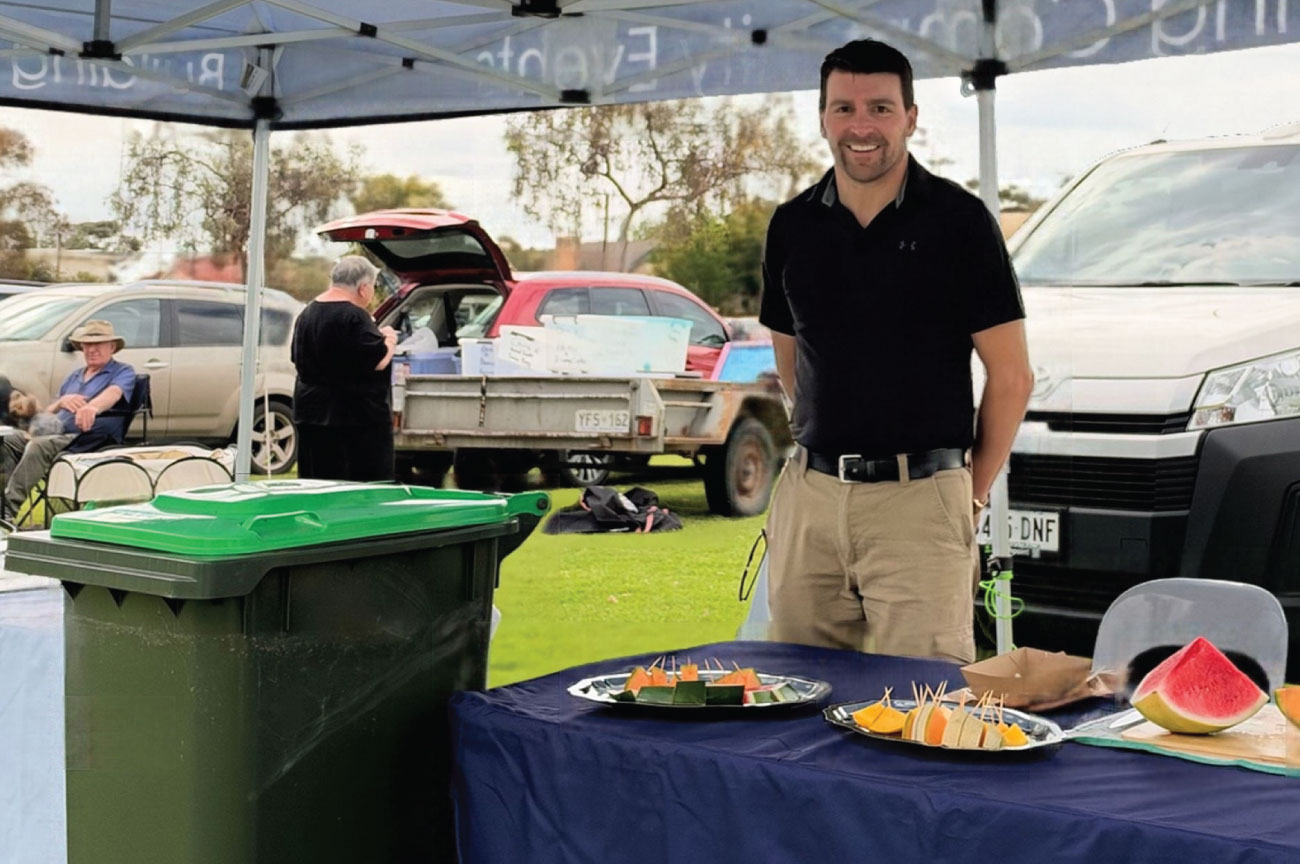
Have a question about what belongs in your green bin, or want to know what happens to your food scraps after collection? The Riverland FOGO education team, supported by Council, is heading to Loxton and Waikerie and would love you to stop by.
Grab a free piece of fruit and see just how easy the change can be: enjoy the food, then place the peel or scraps straight into the green bin. You can also collect free bin magnets, take home some helpful information and have your waste and recycling questions answered.
Find the team at:
- Loxton Lights Up: 28 November 2026, 4.30pm–9.30pm
- Waikerie IGA: 4 December 2026, 12pm–4pm
No booking needed. Simply drop by, say hello and learn how one small change at home can help keep valuable organic material out of landfill.
Can’t make it, or want to know where those peels and scraps go next? Read on to learn how Riverland FOGO material is turned into compost and quality soils.
From scraps to soil: where does your FOGO go?
Did you know Australia wastes around 7.6 million tonnes of food every year? That’s more than 300 kilograms per person.
Food waste is a major environmental and economic challenge, with households responsible for around 2.5 million tonnes, or 30% of Australia’s total food waste.
Reducing food waste in the first place is essential, but unavoidable scraps still have value. Residents with a three-bin service can place their food scraps in the green FOGO bin. For households with a two-bin service, home composting or feeding suitable scraps to animals are the preferred options. Where these aren’t possible, food waste should be placed in the red landfill bin.
Danny Mitroussidis, Manager of International Development at Peats Group, recently spoke on ABC Riverland Breakfast about how food and garden organics are processed into quality compost and mulch.
“Putting organics back into the ground has a lot to do with our food security, our biosecurity, and also makes good economic sense.”
“120 tonnes of green-bin organic waste is being collected each fortnight from Riverland councils. This is not going to landfill and is being made into compost and quality soils,” he said.
So next time you’re clearing your plate or preparing a meal, remember: your food scraps can help reduce landfill waste and return valuable nutrients to the soil.